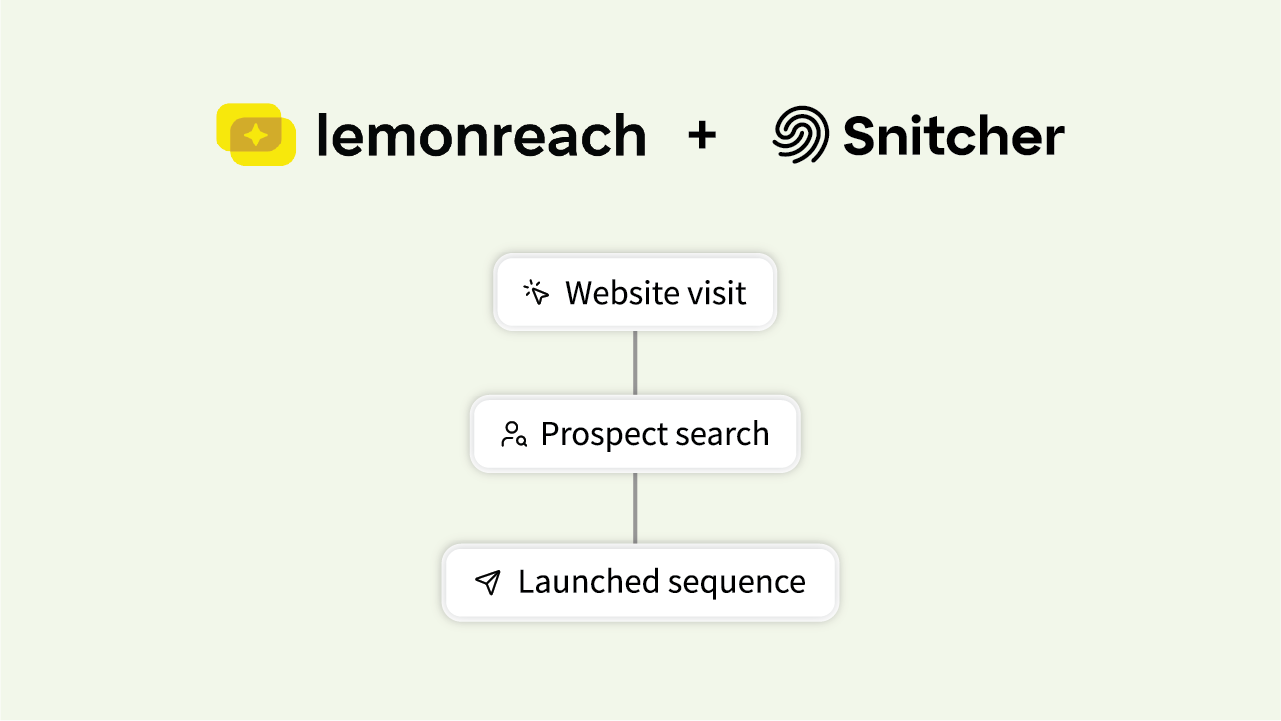
lemonreach is now a certified Snitcher partner. Snitcher shows you which companies are on your website. lemonreach takes the ones that fit your segment, finds the right people there, verifies their contact details and writes to them about what the company was reading. You can approve each company yourself or let it run on its own.
It has limits too, and I’d rather you read about them here than find out from a confused reply.
Why is cold outbound so hard?
Most cold outbound fails for one of two reasons, and bad copy is rarely one of them. Either you wrote to a company that was never going to buy, or you wrote to one that might buy someday and caught them in a week when they had other things on their mind.
A list filtered on your ideal customer profile helps with the first problem. It tells you who could buy. It doesn’t tell you who is thinking about it this week, which is why a well-written sequence to a well-filtered list can still get a reply rate that feels like a lottery.
What’s missing is a reason to write now. That’s what a signal gives you.
Why are website visits the strongest signal?
Most buying signals tell you something changed at a company. They hired someone, raised money or dropped a tool. A website visit is more direct: someone there is reading about what you sell, today.
Most of those visitors never fill in a form. They read a few pages, maybe check pricing, and leave. If you can’t see which companies they came from, your sales team never hears about it.
Snitcher solves the first half of that by identifying the companies behind your traffic. Connect your Snitcher account to lemonreach and those companies show up as a monitor.
What is a website visitor monitor?
A monitor in lemonreach watches for something that makes a company worth contacting now. The website visitor monitor watches your Snitcher data.
You set it up around a segment, using company size, industry, country and so on. Visiting companies that don’t fit are dropped, so a student writing a thesis or a competitor checking your pricing never ends up in a sequence. For each company that does fit, lemonreach looks for people in the roles you picked and finds their verified work emails and direct phone numbers. Then it checks which pages the company viewed, writes the first email around that, and enrolls the contact in a sequence that sends from your own inbox.
So the email shows up while the company is still thinking about the problem, and it goes to someone whose job title says they should care.
Does lemonreach know exactly who visited?
No. Snitcher works at company level. It tells you which company visited, but it can’t tell you who was sitting at the keyboard.
lemonreach doesn’t pretend otherwise. You tell it which role you want to reach, and it finds people in that role at the visiting company. If you sell to heads of sales, it looks for heads of sales there. That’s a much better starting point than a generic list and it improves your odds of reaching someone relevant. It can’t promise that the person you email is the person who visited, so the email is written to make sense either way.
This matters more than it sounds. If a message implies the sender knows who you are and gets it wrong, the recipient stops trusting everything else in it.
How does lemonreach use the pages a company visited?
It reads them to work out what the company was probably trying to figure out. Someone who spent five minutes on your integrations page has a different question from someone who went straight to pricing.
That shapes the email, but quietly. The email never says “I noticed you visited our site”. It opens with the problem that page deals with, the way a rep who knew the topic well might start a conversation. Done right, the recipient thinks the email is unusually relevant and has no reason to feel watched.
Quoting someone’s browsing history back at them is the quickest way to waste a good signal. If you want more on writing outreach this way, we wrote about how lemonreach personalizes outreach without manual research.
Why does location versus HQ matter?
A visit from a company doesn’t necessarily come from its headquarters. A large business might visit from a regional office in Germany while the people who sign contracts sit in Stockholm.
lemonreach keeps the two apart: where the visit came from, and where the company is headquartered. If your team covers a territory, the office that visited may be the right target. If decisions are made centrally, HQ is probably where to look for a prospect. Having both stops you from emailing the wrong country.
Should you approve each company or automate everything?
Each website visitor monitor runs in one of two modes, and you choose per monitor.
Review first
lemonreach shows you the visiting companies that match your filters, and nothing else happens until you approve one. After that it searches for prospects, enriches them and enrolls them in a sequence.
Use this while you’re new to it or still tuning your ICP. It also makes sense when each account is worth enough that you want to make the call yourself.
Fully automated
lemonreach prospects, enriches and enrolls matching companies by itself while the visit is still fresh. With no approval step, the time between a company reading your site and your email arriving is as short as it gets.
This works once your filters are tuned and you trust the segment. A visitor signal loses most of its value within days, and automation is how you keep up with it.
What we usually suggest: start with review first and pay attention to which companies you approve and which you reject. Tighten the filters until you’re approving almost everything, then switch to fully automated.
What does this change for a sales team?
Instead of working through a list, reps get a steady feed of companies that showed interest recently. Nobody has to decide who to contact next because the visit already answered that, so their time goes into the conversations that follow.
It also lifts the quality of cold outreach in general. The email is about something the company actually read, and it arrives while they still remember reading it. For cold outbound, that’s about as good as timing gets.
If you want to try it on your own traffic, book a demo and we’ll set up a website visitor monitor with you.