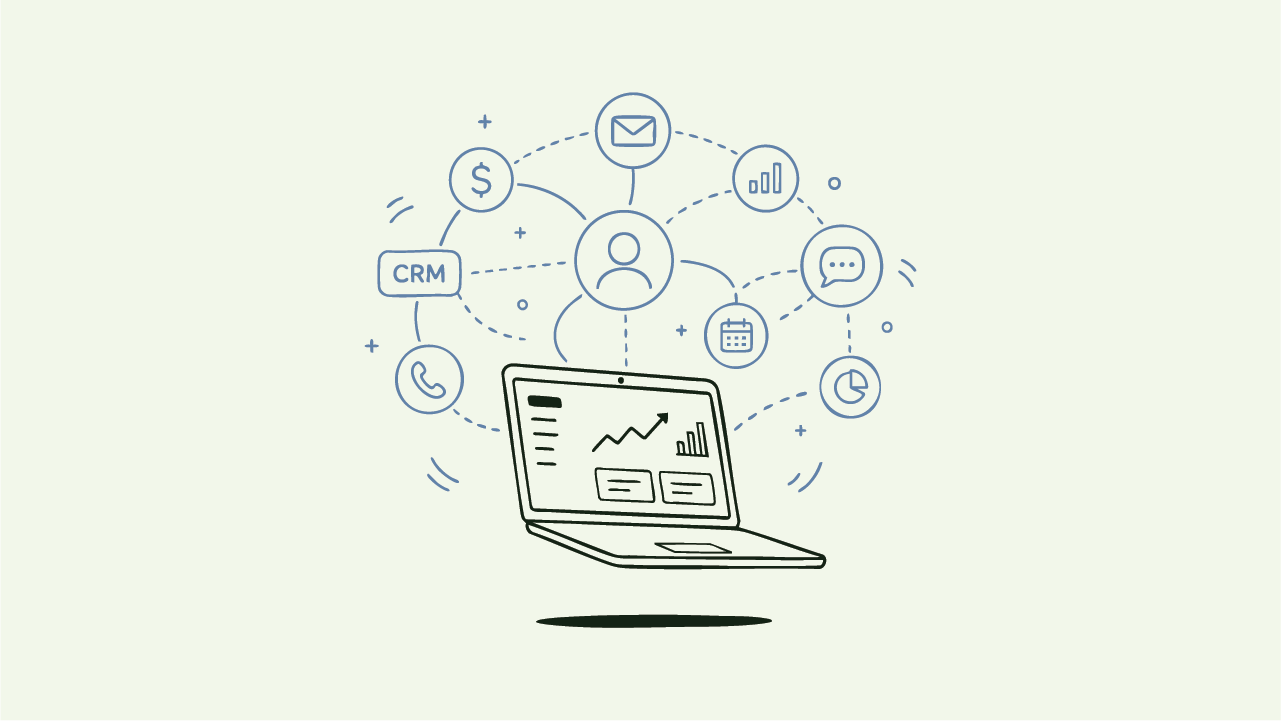
An AI SDR is software that does the repetitive work of a sales development representative: finding prospects who fit your ideal customer, verifying their contact details, writing and sending outreach, and sorting the replies, so a human rep spends their time on live conversations instead of building lists. It is not a chatbot bolted onto your website, and it is not a robot that closes deals. Think of it as the engine that fills the top of your funnel, running the mechanical steps a rep would otherwise grind through by hand.
The job title it borrows from is real. An SDR is the person who prospects, reaches out, and books qualified meetings for the closers. Most of that role is research and follow-up, and most of that is mechanical. That is the part an AI SDR takes.
What does an AI SDR actually do?
It runs the outbound chain end to end. In practice that breaks into a few steps:
- Targeting. You set your verticals and personas once, and the system works out the likely pain points and the tone that fits each buyer. That brief becomes the context for everything it writes later.
- Prospecting. You describe your ideal customer in plain English, and it returns matching companies and people instead of you scrolling LinkedIn and copying names into a sheet.
- Enrichment. It verifies a work email and direct phone number for each person through a multi-layer validation workflow, which checks each contact across several validation steps until it gets a confirmed result.
- Sequencing. It drafts a first email and the follow-ups in a consistent voice, then sends them from your connected inboxes on a schedule.
- Calling. Call steps run through Aircall inside the same sequence, so email and phone work off one record.
- Reply triage. Every response gets tagged, so a rep only opens the conversations worth their time and skips the bounces and out-of-offices.
The point of stringing these together is that nobody is babysitting handoffs between four separate tools. The prospect found in step two is the same record that gets written to in step four.
How is an AI SDR different from a regular sales tool?
Older sales software gives you a feature and leaves the work to you. A data tool hands you a list you still have to clean. A sequencer sends emails you still have to write. A dialer calls numbers you still have to find.
An AI SDR does the connecting work between those features. It does not just store your prospects, it goes and finds them. It does not just send your copy, it writes a draft per prospect from what it knows about them. The shift is from a tool you operate to a workflow that runs, with a rep checking the output rather than producing every input.
What is an AI SDR good and bad at?
It is good at volume and consistency. It will research, write, and follow up at a scale a person cannot match, and it will not get bored on email number 200 or forget to send the third follow-up.
It is bad at judgment and at reading people. Catching hesitation in a voice, knowing which objection is the real one, building rapport over a few months: those stay human. An AI SDR that promises to handle the live call and the negotiation is overselling. Treat it as the part of the team that fills the funnel, not the part that closes.
Do you need to hire more SDRs to do more outbound?
No, and that is the actual case for the tool, smaller and more honest than “replace your team.” A sales org built around AEs can grow its outbound without adding SDR headcount, because the limit was never the closer’s time, it was the manual hours stacked in front of it: building lists, verifying contacts, writing the same first email two hundred times.
The version that works is one rep supervising the output of an AI that does the grunt work, then spending their freed-up time on calls and replies. That rep now covers the prospecting, enrichment, and follow-up that used to take two or three people, so a small team punches above its size instead of stalling until you can afford the next hire. The version that fails is firing the team and trusting the software to run the whole motion unattended. The first lets you scale activity without scaling the org chart. The second produces a flood of generic email that quietly burns your domain.
If you want to see what that is worth against your own numbers, the ROI calculator runs the math on reps, reply rates, and the cost of the SDR hires you would otherwise make to hit the same volume.
What should you check before trusting one?
A few things separate an AI SDR that compounds from one that just adds noise:
- Verified data. Ask exactly how emails and phone numbers get confirmed. Unverified data is the fastest way to wreck your sender reputation.
- Real personalization. The copy should pull from something true about each prospect, their role, company, or a recent signal, not run a mail merge with extra steps.
- Email and phone in one sequence. Buyers do not live in one channel, and some of the best replies come after a call.
- Connections to where you already work. It should send from your inboxes and write to your CRM, not trap your data somewhere new.
An AI SDR is worth having when it deletes the manual hours between knowing who you want to reach and actually having the conversation. That is the whole job: give your reps their day back, and let them spend it talking to buyers.