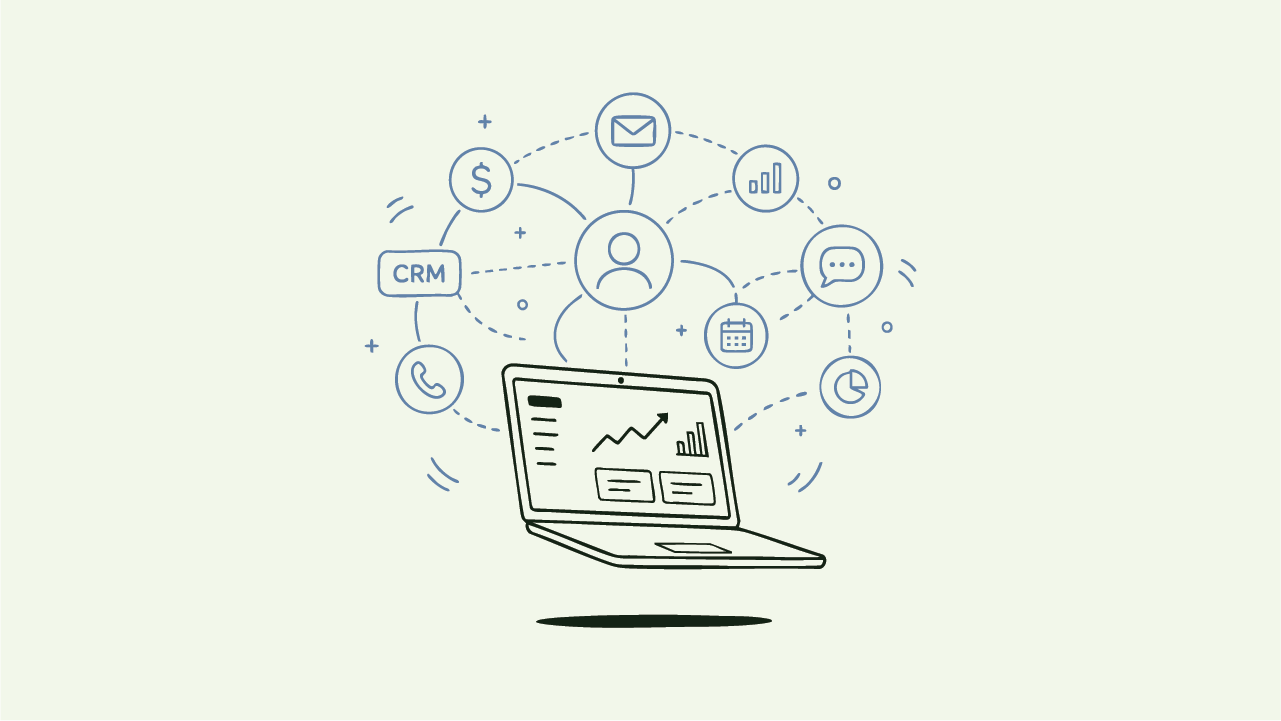
An AI SDR is a good fit for an account executive who runs their own outbound when it takes over the research, list building and follow-up and leaves the AE the replies, the calls and the decisions. The test is control: it should send from your mailbox, let you read each email first, and route every reply to you.
We say this as account executives ourselves. The founders of lemonreach are AEs who built the tool for their own outbound. What follows is a framework for deciding, not a results claim.
Why do AEs end up doing their own outbound?
Many teams never hire SDRs. A founder-led company, a two-person sales team or an AE with a territory and no pipeline support all run the same loop: find accounts, find contacts, write something worth reading, follow up, then take the call. The first half of that loop is not selling, but it decides whether there is anything to sell.
Salesforce’s 2023 State of Sales report found that reps spend about 28% of their week actually selling, with the rest going to tasks such as deal management and data entry. That figure covers all reps, not only AEs doing outbound, so read it as a sign of where time leaks, not as your number. Measure your own week before you buy anything.
What does an AE actually need from an AI SDR?
Four things, in this order:
- Time back on research and list building. Finding companies that fit, finding the right person and checking the email is the most mechanical part of the job.
- Follow-up that does not depend on memory. Most replies come after the first touch, and an AE with live deals will drop the third email.
- Your own mailbox. Messages should come from your address, so replies land in your inbox and your reputation is the one at stake. A tool that sends from its own shared domain takes that control away.
- A hand on the wheel. You will not put your name on emails you have not seen. A preview step before sending is not a nice-to-have for this audience.
lemonreach is built around those four: prospecting from a plain-English brief, verified contacts, sequences sent from your connected inbox with each email previewable, and replies tagged by intent for you to answer. Calling runs through your Aircall workspace.
What should you hand off, and what should you keep?
| Hand off | Keep |
|---|---|
| Building the list from your ideal customer | Choosing which accounts and segments matter |
| Finding and verifying work emails and phone numbers | Deciding who is worth a personal call |
| Researching each person from LinkedIn and recent news | Reading the draft before it goes out |
| Drafting the first email and the follow-ups | Replying to anyone who answers |
| Scheduling the sequence and tagging replies | Discovery calls, negotiation, the close |
The line follows judgment. Anything where a wrong decision costs you a relationship stays with you. Anything repeatable goes to the software. For the longer version of what an AI SDR does and does not do, read What is an AI SDR?.
What does an outbound week look like with and without one?
The hours below are an illustration, not measured data. They assume an AE who sets aside about eight hours a week for outbound and spends them by hand. Replace them with your own.
Without an AI SDR (illustrative):
- Building and cleaning lists: 2 hours
- Researching people and writing first emails: 3 hours
- Checking and sending follow-ups: 1.5 hours
- Sorting replies, including out-of-office and bounces: 1 hour
- Calls and booked meetings: 0.5 hours
With an AI SDR (illustrative):
- Writing the brief and reviewing the list: 1 hour
- Skimming previews and editing the ones that matter: 1.5 hours
- Reading tagged replies and answering the real ones: 1.5 hours
- Calls and booked meetings: 4 hours
The point is not the exact numbers. The shift is from producing every input to reviewing the output, with more of the week going to conversations. If your own tally shows list building and follow-up are a small slice, an AI SDR will not change much for you.
What are the risks for an AE?
- Sending to bad data. Unverified addresses bounce and hurt your sender reputation. Ask how contacts are verified. lemonreach runs each contact through a multi-layer validation workflow before it enters a sequence.
- Generic messages. A tool that sends one template to everyone teaches buyers to ignore your name. Check that each email draws on something true about the person, and read the preview.
- Unattended replies. Some tools answer replies on their own. If you do not want an AI speaking to your best prospect without you, pick one that hands replies to you. See how the two approaches differ in lemonreach vs AiSDR.
- Too much volume too fast. More sends are not more meetings. Start with a small, well-targeted list.
How do you start as an AE?
- Write down your ideal customer in two sentences, as you would explain it to a new SDR.
- Run a small list, 50 to 100 contacts, and read every preview.
- Track replies and meetings for a few weeks and compare with how you did it by hand.
- Scale volume only after the first batch reads like something you would have written.
If the maths matters to you, pricing is published, and the ROI calculator lets you put in your own numbers.