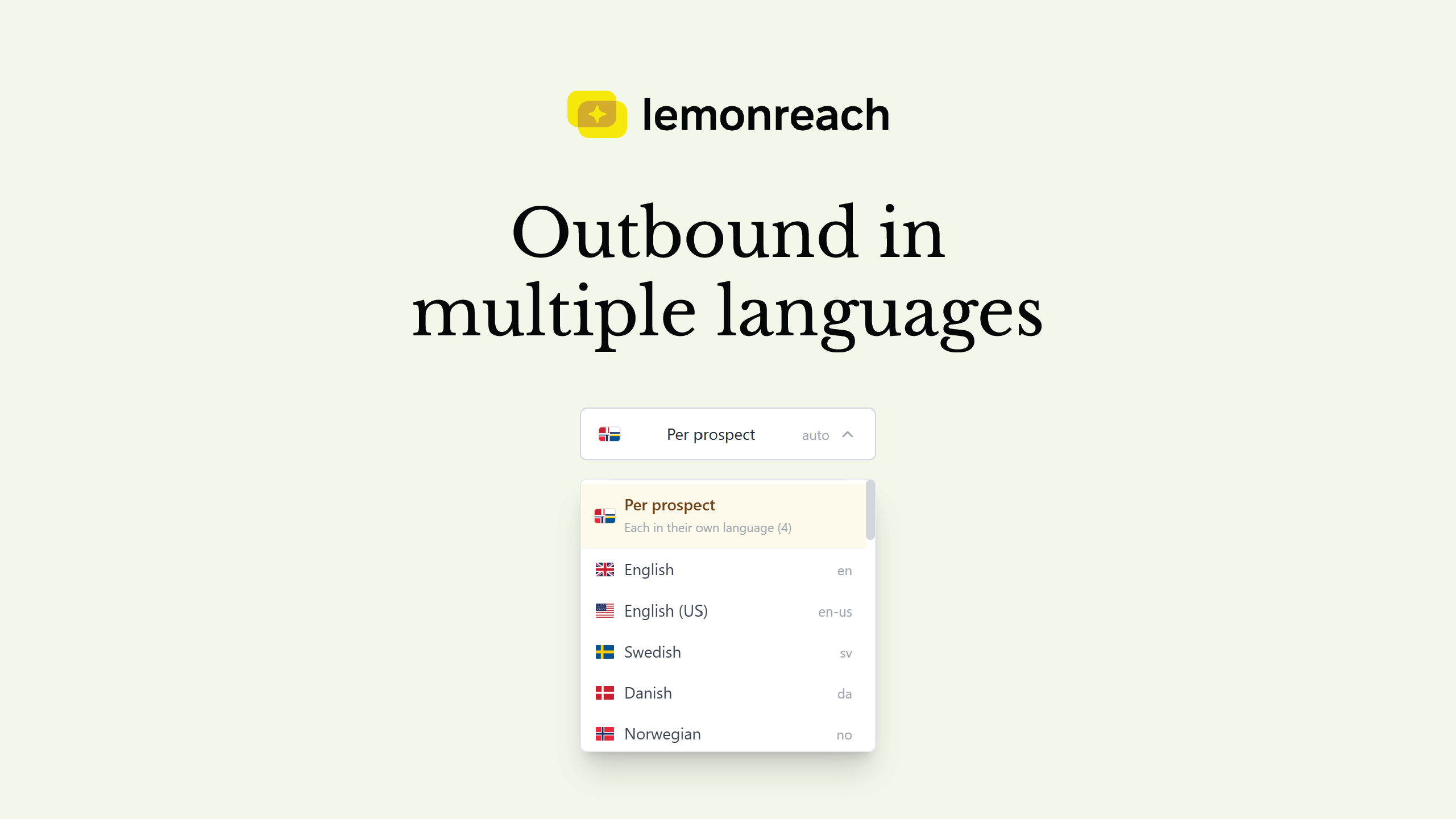
You don’t need one campaign per country. In lemonreach, the same sequence writes to every prospect in their own language, Swedish, Danish, Norwegian or Finnish, all within a single campaign, and multilingual output is included in all plans.
The hard part is therefore not running the campaign but structuring the list and reviewing the copy. Here is what I would do.
Why write in the recipient’s language?
An email in your own language is easier to read and feels more personal. MarketingSherpa reports an IBM example where reply rates in Poland rose from 4.24 percent in English to 17.43 percent in Polish.
The same source warns that translations not done by well-trained native speakers can hurt replies. That is the important part: writing in the local language only helps if the writing is good.
Across the Nordics, English is also widely accepted in B2B, which is exactly why an email in the prospect’s own language stands out from the others in the inbox. Compare the two on your own list.
How do you structure a Nordic list?
- Language per person, not per country. A company in Stockholm may have a Danish or Finnish CEO. Set the language on the contact.
- Segment by target audience first. The same role and the same problem across all countries gives you one sequence. Market differences are a separate question.
- Start small. 25 to 50 contacts per language is enough to review the copy and see the first replies.
- Measure per language. Break out replies and meetings by language, otherwise you won’t know whether a particular variant is working.
What goes wrong with manual translation?
- Every change has to be made four times. If you update the offer in a sequence running in four languages, that’s four changes and four chances for errors.
- Tone and titles. Formal versus informal address, how you write a job title and which industry terms are used all differ, and a native speaker will notice immediately.
- Machine-translated copy sounds translated. A word-for-word translation of an English email misses how you actually write a short cold email in Swedish. See how to write a good cold email.
What does a Nordic campaign look like in lemonreach?
You describe your target audience and offer once. The sequence writes every email for the individual, drawing on news about the person and their company, in the language you have set for that contact. See personalized outreach without manual research for how the research is gathered, and sequences for multilingual output.
An example setup:
- A list of 150 decision-makers at Nordic e-commerce companies.
- Language field: 60 Swedish, 40 Danish, 30 Norwegian, 20 Finnish.
- One sequence with an opening email and two follow-ups.
- Review the first emails per language, ideally with a native speaker, before the rest go out.
- Compare replies per language after two weeks.
The numbers in this example are illustrative, not results.